
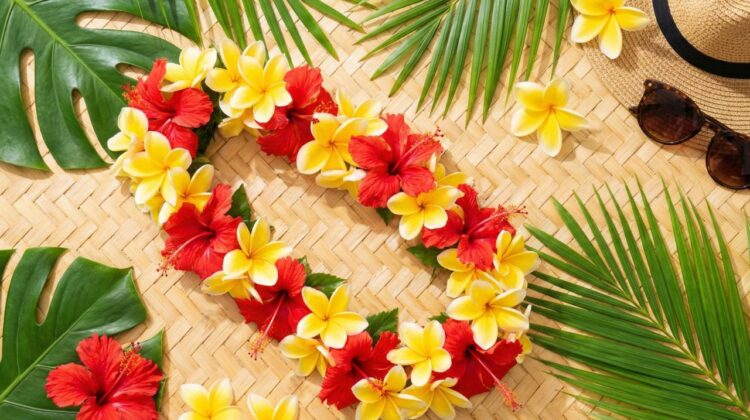
There is no place on Earth quite like Hawaii. It is a biological paradise where the air smells of sugar and rain, and the landscape is painted in neon colors. But the true soul of the islands lies in the Hawaiian Flowers.
In Hawaiian culture, flowers (Pua) are not just decorations; they are language. A lei placed around your neck is a hug you can wear. A flower behind your ear signals your relationship status. Some blooms are even considered physical forms of the gods.
As Shiny Aura, I am obsessed with the stories behind these blooms. Whether you are planning a tropical-themed garden or just dreaming of your next vacation, here are 15 essential Hawaiian flowers that bring the Aloha spirit to life.
1. Yellow Hibiscus (Pua Aloalo)
We have to start with the royalty. The Yellow Hibiscus (Hibiscus brackenridgei) is the official state flower of Hawaii. Unlike the common red variety, this native species is rare and endangered.
Significance: It symbolizes power and royalty. Ancient Hawaiians considered the hibiscus a symbol of delicate beauty and fleeting youth, as the flower typically blooms for only one day.
2. Plumeria (Frangipani)
If you close your eyes and think of Hawaii, you are probably smelling Plumeria. This is the most popular flower for making leis because of its sturdy petals and intoxicating scent (like peaches and cream).
The Tradition: If you wear a Plumeria behind your left ear, it means you are taken (married or in a relationship). Behind your right ear, it means you are single and looking.
3. Bird of Paradise
While native to South Africa, the Bird of Paradise has become an icon of the Hawaiian landscape. It looks exactly like a tropical bird with orange and blue plumage taking flight.
Meaning: It symbolizes magnificence and joy. It is the ultimate statement flower for tropical arrangements because it lasts for weeks in a vase.
4. Red Ginger (Awapuhi ‘Ula’ula)
This isn’t a flower you smell; it’s a flower you admire for its structure. The Red Ginger produces a tall, bright red cone (bracts) with tiny white flowers emerging from it. It looks like a torch burning in the jungle.
Gardening Note: It loves humidity. If you live in a dry climate, this plant will struggle. It represents wealth and diversity.
5. Pikake (Arabian Jasmine)
This tiny white flower holds a special place in history. It was the favorite flower of Princess Kaiulani, who named it “Pikake” (Peacock) because she loved the peacocks in her garden.
Meaning: It symbolizes romance and love. A lei made of Pikake is considered one of the most elegant and prized gifts for a bride.
6. Naupaka (The Half Flower)
The Naupaka is famous for a heartbreaking legend. The flower looks like a perfect half-circle, as if the other half was torn off.
The Legend: Two lovers, Naupaka (a princess) and Kaui (a commoner), were forbidden to marry. They separated forever—one went to the mountains, the other stayed by the ocean. Today, the Mountain Naupaka and the Ocean Naupaka both bloom as “half flowers.” Legend says they will only be whole again when the lovers are reunited.
7. Ohia Lehua
This tree is sacred to Pele, the Volcano Goddess. It is often the first plant to grow on fresh black lava rock. The flower looks like a red puffball.
The Legend: It is said that if you pick a Lehua blossom, it will rain, because the gods are crying for the lovers (Ohia and Lehua) who were separated by a jealous Pele.
8. Anthurium
With its glossy, heart-shaped red spathe, the Anthurium looks almost artificial because it is so perfect. It is known as the “Heart of Hawaii.”
Meaning: It symbolizes hospitality. It is a very long-lasting cut flower, making it a staple in hotel lobbies and welcome bouquets.
9. Heliconia (Lobster Claw)
Related to the banana family, Heliconia produces hanging waxy bracts that look like lobster claws or parrot beaks. They come in vibrant reds, yellows, and greens.
Gardening Tip: These are giants. Some varieties can grow 15 feet tall. They create an instant jungle screen for privacy.
10. Tuberose (Kupaloke)
Though not native, the Tuberose thrives in Hawaii and is widely used for leis. It has a heavy, sultry perfume that is even stronger than Jasmine.
Meaning: It symbolizes dangerous pleasure. In Hawaiian weddings, Tuberose leis are often used for the bride and groom.
11. Protea
Head up to the cooler slopes of Haleakala on Maui, and you will find fields of Protea. These prehistoric-looking flowers look like crowns made of felt and leather.
Meaning: Transformation and courage. They dry beautifully, keeping their shape for years.
12. Gardenia (Kiele)
The Hawaiian variety of Gardenia (Gardenia brighamii) is highly endangered, but introduced varieties grow everywhere. The scent is unmistakable—sweet, creamy, and heavy.
Meaning: Secret love and joy. It is a classic “corsage” flower.
13. Bougainvillea
You cannot drive down a Hawaiian highway without seeing walls of neon pink, purple, or orange Bougainvillea. The colorful parts are papery leaves (bracts), not petals.
Gardening Tip: They are drought-tolerant and love the hot sun, making them perfect for the dry leeward sides of the islands.
14. Ti Plant (Ki)
Technically grown for its leaves, the Ti Plant is culturally more important than most flowers. The leaves are used to wrap food (Laulau), make hula skirts, and ward off evil spirits.
Good Luck: It is traditional to plant a Green Ti plant at the four corners of your property to protect the home.
15. Orchid
Hawaii is often called the “Orchid Isle” (specifically the Big Island). Thousands of varieties grow here, from the common Dendrobium used in leis to the exotic Vanda.
Meaning: Luxury, beauty, and strength. An orchid lei is a durable, long-lasting gift that welcomes visitors with elegance.
How to Grow a Tropical Paradise at Home
You don’t need to live in the tropics to enjoy these blooms. Many, like Plumeria and Hibiscus, thrive in pots.
The secret is drainage and heat. Bring them indoors before the temperature drops below 50°F (10°C), and give them the sunniest window you have. With a little care, you can have a piece of the Aloha spirit in your living room.