
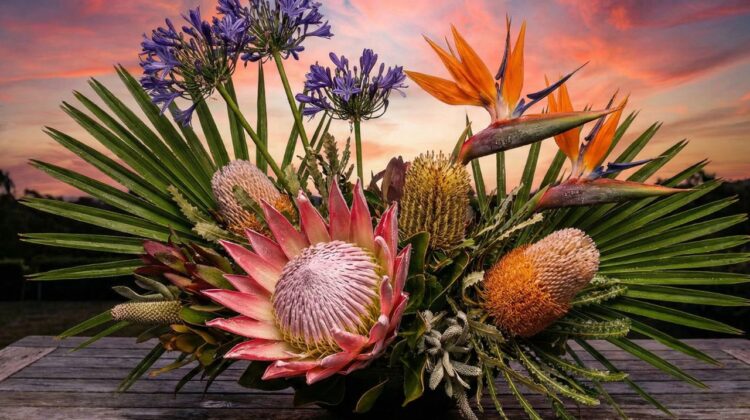
When we think of African flora, we might picture the sweeping acacias of the savanna or the Baobab trees. But Africa is also the motherland of some of the world’s most spectacular flowers.
From the mist-covered mountains of the Cape to the humid jungles of the equator, African flowers are famous for being bold, structural, and resilient. Many of our garden favorites—like the Gerbera Daisy and the Calla Lily—actually hail from this diverse continent.
As Shiny Aura, I find African blooms irresistible because they bring a touch of the wild, “untamed” beauty to a domestic garden. They are not shy; they demand attention. Here are 15 exotic African flowers to add drama and heat to your landscape.
In this article, we'll cover
- 1. King Protea (Protea cynaroides)
- 2. Bird of Paradise (Strelitzia reginae)
- 3. African Violet (Saintpaulia)
- 4. African Daisy (Osteospermum)
- 5. Calla Lily (Zantedeschia aethiopica)
- 6. Agapanthus (Lily of the Nile)
- 7. Gerbera Daisy (Barberton Daisy)
- 8. Gloriosa Lily (Flame Lily)
- 9. Red Hot Poker (Kniphofia)
- 10. Clivia (Bush Lily)
- 11. Freesia
- 12. Gazania (Treasure Flower)
- 13. Plumbago (Cape Leadwort)
- 14. Impatiens (Busy Lizzie)
- 15. Amaryllis Belladonna (Naked Ladies)
1. King Protea (Protea cynaroides)
The national flower of South Africa is a true giant. The King Protea looks almost prehistoric, with a massive flower head that resembles a crown or an artichoke made of velvet. It symbolizes change and transformation.
Gardening Tip: This plant needs fire to regenerate in the wild! In the garden, it demands poor, acidic, sandy soil and excellent drainage. It hates phosphorus fertilizer, so treat it mean to keep it keen.
2. Bird of Paradise (Strelitzia reginae)
Native to South Africa, the Bird of Paradise is the ultimate symbol of the tropics. Its orange and blue petals look exactly like an exotic crane taking flight from a green beak. It represents joy and freedom.
Why it works: It creates instant height and structure. The paddle-shaped leaves look lush even when the plant isn’t blooming.
3. African Violet (Saintpaulia)
Discovered in the cloud forests of Tanzania, the African Violet is one of the world’s most popular houseplants. It is small, fuzzy, and produces clusters of purple, pink, or white flowers. It symbolizes devotion and faithfulness.
Shiny’s Tip: Water from the bottom! The fuzzy leaves hate getting wet and will spot if water droplets touch them. Place the pot in a saucer of water and let it drink from the roots up.
4. African Daisy (Osteospermum)
If you want color that pops, plant Osteospermum. These daisies have metallic-looking centers and petals that often look like spoons or have ombré coloring. They symbolize innocence and purity.
The Vibe: They close their petals at night and open with the sun. They are incredibly drought-tolerant and perfect for rock gardens.
5. Calla Lily (Zantedeschia aethiopica)
Simple, elegant, and modern. The Calla Lily grows wild in marshy areas of Southern Africa. With its single trumpet-shaped spathe, it symbolizes magnificent beauty.
Design Note: While white is classic, hybrid varieties come in deep purple (almost black), yellow, and burnt orange, making them versatile for any color palette.
6. Agapanthus (Lily of the Nile)
The name Agapanthus comes from the Greek words for “Love Flower.” These plants produce tall stalks topped with a firework explosion of blue or white trumpet flowers. They symbolize love letters.
Gardening Tip: They love being pot-bound. If you plant them in a container, crowd the roots, and they will bloom more prolifically.
7. Gerbera Daisy (Barberton Daisy)
Native to South Africa, the Gerbera Daisy is the fifth most popular cut flower in the world. With its large, perfect disk shape and neon colors, it looks like a child’s drawing of a flower brought to life. It symbolizes cheerfulness.
8. Gloriosa Lily (Flame Lily)
This climbing vine is a showstopper. The Gloriosa Lily features red and yellow petals that curl backward like flames licking the air. It symbolizes fame and honor.
Warning: It is beautiful but deadly. All parts of the plant are highly toxic if ingested, so keep it away from pets.
9. Red Hot Poker (Kniphofia)
Also known as “Torch Lily,” this plant looks like a glowing poker fresh out of the fire. The spikes are two-toned, usually red at the top fading to yellow at the bottom. They attract hummingbirds like magnets.
The Look: They add a vertical, architectural element to xeriscapes and drought-tolerant borders.
10. Clivia (Bush Lily)
Found growing in the shade of trees in South Africa, Clivia is a lifesaver for dark corners. It produces clusters of orange or yellow trumpet flowers and has dark, strap-like evergreen leaves.
Gardening Tip: It is a fantastic houseplant for low-light areas. It needs a period of cool, dry rest in the winter to trigger blooming in the spring.
11. Freesia
We love them for their scent. Freesias are native to the Cape Province and produce zygomorphic (one-sided) flowers that smell like peppery honey. They symbolize trust and friendship.
12. Gazania (Treasure Flower)
Gazanias are ground-hugging annuals that thrive in baking heat. Their flowers come in warm shades of bronze, gold, and orange, often with contrasting rings in the center. They symbolize richness.
Why it works: They are salt-tolerant, making them excellent for seaside gardens where other plants fail.
13. Plumbago (Cape Leadwort)
If you need a shrub that is covered in sky-blue flowers for months on end, choose Plumbago. It is a scrambling shrub often used as a hedge in warm climates. It symbolizes holy wishes.
Shiny’s Tip: It attracts the Plumbago Blue butterfly. The sticky calyxes of the flowers can hitch a ride on pets, helping the plant spread seeds.
14. Impatiens (Busy Lizzie)
You might be surprised to learn that the common Impatiens (Impatiens walleriana) originated in East Africa (Zanzibar). They are the world’s most popular bedding plant for shade. They symbolize motherly love.
15. Amaryllis Belladonna (Naked Ladies)
Unlike the winter-blooming Hippeastrum (often sold as Amaryllis), the True Amaryllis is native to the Cape. It sends up flower stalks in late summer after the leaves have died back, earning it the nickname “Naked Ladies.” It symbolizes pride.
Final Thoughts
African flowers teach us that beauty can thrive in extremes—from the dry heat of the veld to the deep shade of the jungle.
By inviting these exotic blooms into your home, you aren’t just gardening; you are going on a botanical safari.