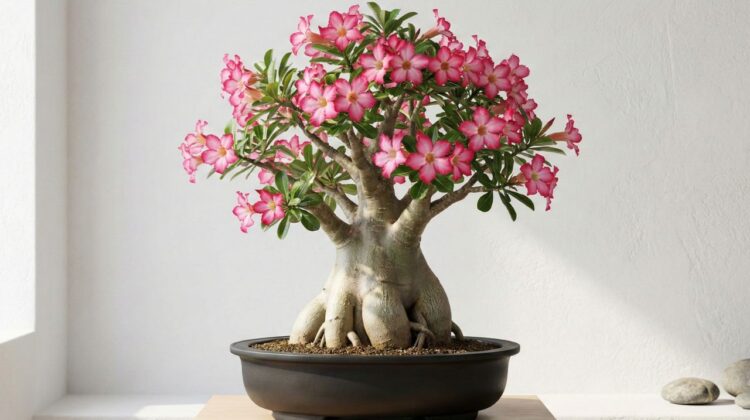
In the vast, scorching landscapes of East Africa and Arabia, where few things survive, there grows a plant that defies the rules. It has a bulbous, swollen trunk that looks like it belongs on an alien planet, yet it is crowned with trumpet-shaped flowers so delicate and pink they rival the finest roses.
This is the Desert Rose (Adenium obesum).
It is not a rose, and it certainly isn’t delicate. It is a survivor. Here at Morflora, we often talk about flowers that bring softness to a home, but the Desert Rose brings something different: Strength.
If you are going through a tough time, or if you simply appreciate beauty that has a bit of an “edge,” this is the plant for you. It teaches us that you can store your resources, weather the driest storms, and still bloom spectacularly when the time is right. Let’s dig into the aura of this magnificent living sculpture.
In this article, we'll cover
The Botanical Identity: The “Fat” Beauty
Scientific names can be unflattering, and Adenium obesum literally translates to “Fat Adenium.” But in the plant world, “fat” is a compliment!
The Desert Rose is a succulent shrub. That swollen trunk you see at the base is called a caudex. Think of it as the plant’s water bottle. It stores moisture during the rainy season so it can survive—and even thrive—during long droughts.
Because of this unique anatomy, the Desert Rose is a favorite among Bonsai enthusiasts. It can be trained, shaped, and sculpted over decades, becoming more valuable and character-filled as it ages. It bridges the gap between a flower and a tree, between delicate beauty and rugged endurance.
Arrow Poison and Dangerous Beauty
Every rose has its thorn, but the Desert Rose has something more potent: Sap.
In the tribes of Africa, long before it became a trendy houseplant, the Desert Rose was respected (and feared) for its toxicity. The sap contains strong cardiac glycosides. Hunters would boil the sap to coat the tips of their arrows for hunting big game.
The Aura of “Tough Love”: This history gives the plant a symbolism of Defense and Protection. It is beautiful, yes, but it demands respect. It tells the world: “I am lovely to look at, but do not try to consume me.” It represents a person who has strong boundaries—someone who is kind and generous but knows how to protect their energy.
Resilience and The “Wealth Plant”
While its history is intense, its modern symbolism—especially in Asia—is incredibly auspicious.
1. The Symbol of Resilience
The Desert Rose blooms in conditions that would kill a Daisy in a day. It grows out of rock crevices and thrives in baking heat.
- The Message: If you keep a Desert Rose, it is a daily reminder of your own resilience. It says, “No matter how harsh the environment, I will find a way to flourish.” It is the perfect gift for someone starting a new business or recovering from an illness.
2. The “Wealth Plant” (Fu Gui Hua)
In Chinese culture and Feng Shui, the Desert Rose is known as Fu Gui Hua (Flower of Riches and Honor).
- The Symbolism: The swollen caudex (trunk) is seen as a symbol of “fullness” and abundance. The bigger the swollen base, the more wealth and luck it is believed to hold.
- The Belief: Many business owners place a Desert Rose at the entrance of their shop or office to invite prosperity. If the plant blooms heavily, it is considered a sign that good fortune is coming.
Styling a “Living Sculpture”
Styling a Desert Rose is different from styling a bouquet. You are treating it more like a piece of art or a statue. As Shiny Aura, I recommend leaning into Minimalist and Zen aesthetics.
1. The Zen Bonsai Centerpiece
Because the trunk is so sculptural, you don’t want to hide it.
- The Look: Plant your Desert Rose in a shallow, wide Bonsai pot. Choose neutral colors like slate grey, matte black, or unglazed terracotta. Top the soil with small decorative river stones or white gravel.
- Why it works: The shallow pot accentuates the thickness of the trunk. The stones create a clean, meditative look. Place this on a low coffee table or a dedicated plant stand where it can be admired from all angles.
2. The Boho Desert Vibe
If you prefer a warmer, more casual look, embrace the plant’s desert origins.
- The Look: Use a rough-textured Terractta or Clay Pot. Group it with other succulents like Aloe or Agave.
- Why it works: The warm orange of the terracotta complements the pink flowers and the grey-green skin of the trunk. It brings a sun-baked, earthy feel to your patio or sunroom.
How to Keep the Wealth Blooming
The Desert Rose is not a needy plant, but it has specific rules. Break them, and the “wealth” might rot away.
- Sun is Non-Negotiable: This is not a low-light office plant. It craves direct sun. Indoors, it needs a south-facing window. Outdoors, it loves the full heat of summer.
- The “Squeeze Test” for Watering: This is the most important tip I can give you. DO NOT water on a schedule.
- How to tell: Gently squeeze the trunk (caudex). If it feels hard and firm, the plant is hydrated—do not water. If it feels slightly soft or shriveled, it is thirsty—give it a good soak.
- Winter Rest: In winter, the plant goes dormant and may drop its leaves. Reduce watering drastically (sometimes only once a month) during this time.
- Feed the Bloom: To get those spectacular pink trumpets, use a fertilizer with a higher middle number (Phosphorus) during the growing season.
- Safety First: Remember the arrow poison? The sap is toxic to pets and humans. Always wash your hands after pruning it, and keep it out of reach of curious dogs or cats.
Final Thoughts
The Desert Rose is a plant of contradictions. It is rugged yet graceful. It is poisonous yet brings good fortune. It is fat yet beautiful.
It teaches us that we don’t have to fit into a standard mold to be worthy of admiration. We can be thick-skinned, we can take up space, and we can protect ourselves—and still be incredibly beautiful.
If you are ready to invite some resilience (and maybe a little extra luck) into your home, the Desert Rose is waiting.