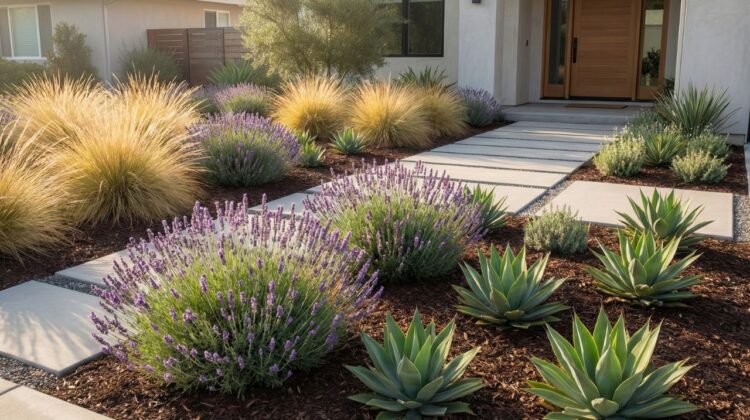
For a long time, the “perfect” front yard meant a lush, emerald-green lawn that needed watering every single day. But times are changing. With rising water bills and hotter summers, homeowners are waking up to a new reality: The lawn is a thirsty luxury we can’t always afford.
But let me clear up a huge misconception. A Drought Tolerant Landscape does not mean a barren yard filled with rocks and cactus. It doesn’t mean “brown and boring.”
As Shiny Aura, I see drought-tolerant gardening (often called Xeriscaping) as an opportunity to be creative. It is about choosing plants that thrive in your natural climate rather than fighting against it. It means vibrant flowers, swaying grasses, and textures that look good even in the heat of August.
Ready to trade your hose for a hammock? Here are 10 drought-tolerant ideas to transform your front yard into a water-wise paradise.
In this article, we'll cover
1. The “Native Meadow” Look
The smartest way to save water is to plant things that evolved to live in your specific area. Native plants are adapted to your local rainfall patterns.
The Design: Replace your turf with a mix of native wildflowers and grasses. For example, Purple Coneflower, Black-Eyed Susans, and native sedges. This creates a soft, romantic “meadow” look that buzzes with pollinators and requires almost zero supplemental watering once established.
2. Ornamental Grasses for Movement
Nothing softens a landscape like grass, but I’m talking about Ornamental Grasses, not turf. Varieties like Blue Fescue, Maiden Grass, or Mexican Feather Grass are incredibly drought-hardy.
Why it works: They add height, texture, and movement to the yard. When the wind blows, your garden dances. Plus, many turn beautiful shades of gold or bronze in the autumn, providing year-round interest.
3. Mediterranean Herbal Garden
Plants from the Mediterranean region are built for hot, dry summers. They usually have silver-grey leaves (which reflect sun) and are packed with fragrant oils.
Plant Picks: Lavender, Rosemary, Sage, and Thyme. Plant these along your front walkway. Not only will they survive a drought, but they will also release an incredible scent every time you brush past them.
4. The Succulent Tapestry
If you live in a frost-free climate, succulents are the kings of water conservation. Instead of planting them individually, plant them in tight groups to create a “tapestry” of color and texture.
The Look: Mix rosettes of Echeveria with upright Aloe and trailing Senecio. The contrast between the blue-greens, pinks, and yellows of the succulents creates a living mosaic that looks like a piece of art.
5. Mulch is Your Best Friend
In a drought-tolerant garden, exposed soil is the enemy. The sun bakes the earth and evaporates moisture instantly. You need to cover every inch of soil with Mulch.
Shiny’s Tip: Use organic wood chips or bark mulch. A thick 3-inch layer keeps the roots cool and reduces evaporation by up to 70%. Plus, as it breaks down, it feeds the soil.
6. Hardscaping Over Softscaping
The easiest way to reduce water usage? Reduce the planting area. Expanding your hardscaping—patios, walkways, and decks—creates functional living space that needs zero water.
The Balance: Don’t just pave the whole yard (that creates heat islands). Use permeable pavers or gravel terraces interspersed with drought-tolerant planting beds to keep the balance between nature and architecture.
7. The Dry River Bed
Mimic the look of water without using a drop. Create a winding “river” through your front yard using smooth river rocks and cobblestones.
The Aura: It creates a sense of flow and movement. Line the banks of your dry river with drought-tolerant shrubs. It guides the eye to the front door just like a stream would.
8. Berms and Swales
Flat yards waste water (it runs off into the street). By sculpting your land into small hills (berms) and shallow valleys (swales), you can capture rain.
How it works: Plant your thirstier plants at the bottom of the swales where rainwater naturally collects. Plant the toughest succulents or cacti on top of the berms. It’s smart engineering disguised as landscaping.
9. Gravel Gardening
Ditch the wood mulch entirely and go for a gravel garden. This is classic “Xeriscaping.” Plants like Agave, Yucca, and Lavender actually prefer growing in gravel because it drains quickly and keeps their crowns dry.
Design Note: Use different colors of gravel (gold, grey, or white) to define different zones of the yard.
10. Container Focal Points
If you still crave thirsty annuals like Petunias or Geraniums, grow them in containers near the front door. It is much more efficient to hand-water three large pots than to water an entire flower bed.
Shiny’s Tip: Use glazed ceramic pots (which hold moisture better than terracotta) and group them together to create a humid microclimate.
The “Establishment” Period Rule
There is one golden rule you must follow: “Drought Tolerant” does not mean “Plant and Forget” immediately.
Even a cactus needs water to grow roots. For the first year after planting, you must water your new drought-tolerant plants regularly. Once their root systems are deep and established (usually by year two), then you can turn off the tap and let nature take over.
Final Thoughts
A drought-tolerant yard is a responsible yard. It respects the resources of our planet while still offering beauty to the neighborhood. By choosing the right plants and materials, you can stop being a slave to the sprinkler and start enjoying your front porch.