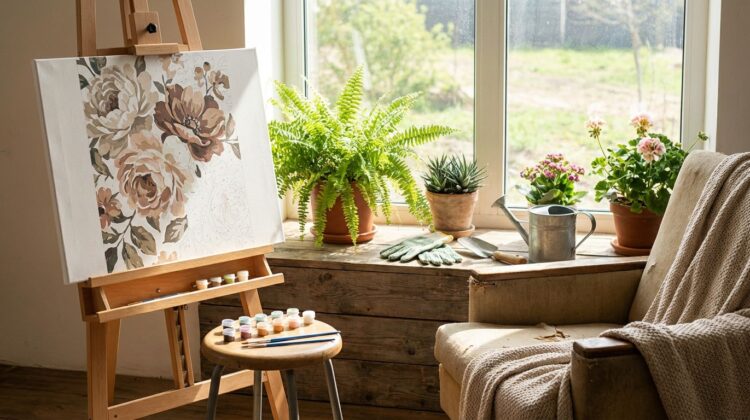
There’s something magical about watching petals unfurl in your garden, tracking the subtle shifts from bud to full bloom.
But what if you could freeze that perfection forever, without worrying about wilting stems or seasonal changes? That’s where a paint by numbers kit becomes your creative companion, transforming fleeting botanical beauty into lasting art.
Both gardening and painting share a remarkable rhythm. They demand patience and presence, asking you to slow down and notice details most people rush past. When you tend roses or layer colors onto canvas, you enter a meditative state where time feels different.
The careful application of paint mirrors the gentle care you give seedlings, both activities rooted in watching something beautiful emerge gradually through your efforts.
Here’s what makes floral painting particularly appealing:
- No seasonal limitations – paint sunflowers in December or tulips in August
- Zero maintenance – your peonies never need deadheading or watering
- Instant expertise – rare orchids that demand specific humidity become approachable through numbered sections
- Portable gardens – bring botanical beauty to apartments, offices, or any wall space
Mental health professionals increasingly recognize what artists have known instinctively: creating floral art provides genuine therapeutic benefits. This “floral therapy” reduces anxiety through focused attention, while the repetitive brushwork creates calming brain patterns similar to meditation.
Unlike the disappointment when garden aphids attack your prized dahlias, painting offers consistent, controllable satisfaction. You’re building something permanent, stroke by stroke, without soil under your fingernails or weather concerns derailing your progress.
Choosing the Perfect Botanical Palette for Your Space
Selecting a botanical paint by numbers design isn’t just about picking pretty flowers. It’s about creating visual harmony between your finished artwork and your living space.
Start by observing your room’s current aesthetic. A bedroom decorated in soft linens and vintage furniture pairs beautifully with pastel peonies or delicate cherry blossoms, while a minimalist living room with clean lines might benefit from bold monstera leaves or striking bird of paradise compositions.
Consider the complexity level that matches your room’s personality. Photorealistic florals with intricate shading work wonderfully in traditional spaces where detail is celebrated, whereas abstract, painterly interpretations of flowers complement contemporary rooms that favor artistic expression over literal representation.
Color theory plays a crucial role in your selection process. If your walls are painted in cool grays or blues, look for kits featuring complementary warm tones like coral roses or golden sunflowers.
Conversely, warm beige or cream walls create the perfect backdrop for cooler botanical palettes featuring lavender, eucalyptus, or hydrangeas.
Here’s a practical approach to choosing your perfect kit:
- Photograph your space and review it alongside potential designs
- Match the dominant colors in the kit to your room’s accent pieces
- Consider scale (larger canvases suit spacious walls, smaller ones work for gallery arrangements)
- Think seasonally opposite (paint spring tulips in autumn, winter amaryllis in summer)
Davincified has the largest paint by numbers collection available online, ensuring a perfect botanical match for any decor style. This extensive selection means you can find exactly the right floral composition to enhance your specific interior vision.
Techniques for Painting Lifelike Petals and Leaves
Flowers present unique challenges that go beyond simple color-blocking. The delicate curves of petals and the irregular, serrated edges of leaves require a different approach than geometric subjects. When you’re painting a rose that transitions from deep crimson to soft pink, or a daisy with paper-thin white petals, your technique needs to match the subject’s organic nature.
Brush care becomes critical with floral patterns. Those graceful curves demand brushes with fine, undamaged tips. Clean your brushes thoroughly between colors, especially when moving from dark stems to light blooms, and reshape the bristles while they’re still damp.
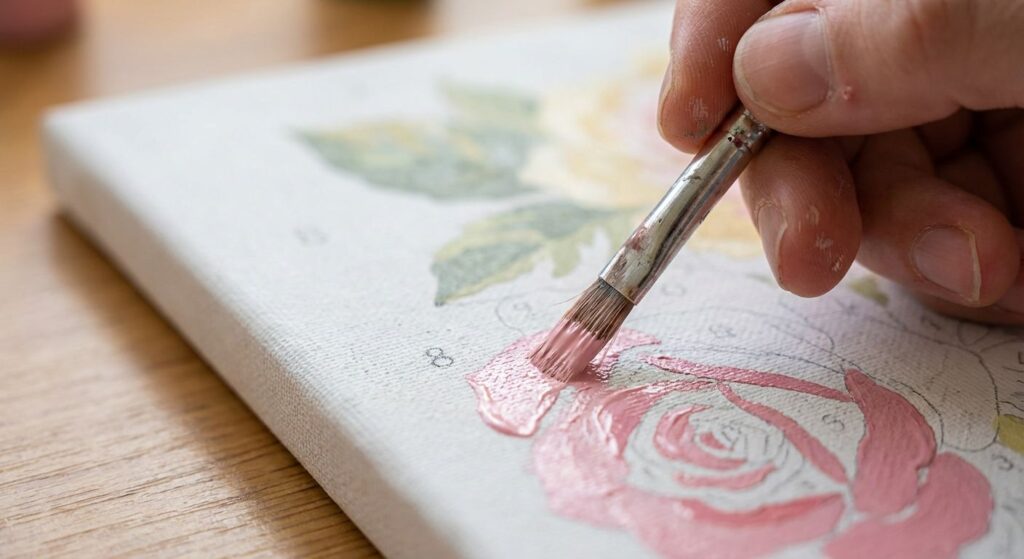
For crisp petal edges and clean boundaries in floral paint by numbers, switch to a small brush and lightly “outline” the numbered shape first, then fill it in. This prevents paint from flooding into neighboring petals and keeps highlights sharp.
Light-colored flowers present their own puzzle. White and pale yellow petals often reveal the printed numbers underneath if you apply just one thin coat. The solution is building coverage through multiple thin layers rather than one thick application.
Premium linen canvas, which is extra thick and wrinkle-free, like what Davincified uses, provides a superior surface for detailed floral textures and holds these repeated layers without warping.
To make floral gradients, like those in roses or peonies, look less flat, thin your acrylic slightly with a drop or two of water and apply 2–3 semi-transparent layers in the shadow zones. This “glazing” keeps the underlying color luminous and mimics real petal depth better than one thick coat.
Always work from background elements to foreground blooms to create convincing depth in your arrangement.
Framing and Displaying Your Everlasting Bouquet
Your completed floral masterpiece deserves thoughtful presentation that protects your work while showcasing those carefully painted petals. The transition from easel to wall marks the moment your practice becomes permanent art, so consider how framing and placement can extend its lifespan and integrate with your living space.
Natural wood frames complement botanical subjects beautifully, creating visual continuity between painted flowers and organic materials. Oak, walnut, or maple frames add warmth without competing for attention.
Floating frames offer a contemporary alternative, suspending your canvas within a shallow box frame that creates subtle shadows and emphasizes the artwork’s dimensions. This approach particularly suits larger floral compositions where you want the entire painting visible without a traditional mat.
Consider building a botanical gallery wall that evolves with your painting journey. Mix completed canvases of varying sizes alongside pressed flowers in shadow boxes or vintage botanical prints.
This layered approach creates depth and tells a broader story about your connection to nature. Arrange pieces at varying heights to mimic how flowers naturally grow at different levels in a garden bed.
To preserve your acrylic blooms against fading, position finished pieces away from direct sunlight, especially harsh afternoon rays. UV-protective varnish adds a defensive layer once paint fully cures (allow 48 hours minimum).
This clear coating also simplifies dusting and protects against accidental fingerprints or minor impacts.
Proper storage between display periods matters just as much as framing choices. Wrap spare canvases in acid-free tissue paper and store them flat in a cool, dry location away from temperature fluctuations.
This prevents warping and keeps your collection ready for whenever you want to refresh your space. Your painted garden remains as vibrant as the day you finished it, requiring none of the maintenance real flowers demand while delivering all the visual joy.